
As Donald Trump’s second presidency unfolded, few figures proved as central—or as quietly formidable—as White House chief of staff Susie Wiles. In an insider account drawn from months of interviews conducted during moments of crisis, Wiles emerges as the operational force holding together an administration defined by ambition, confrontation, and relentless pressure.
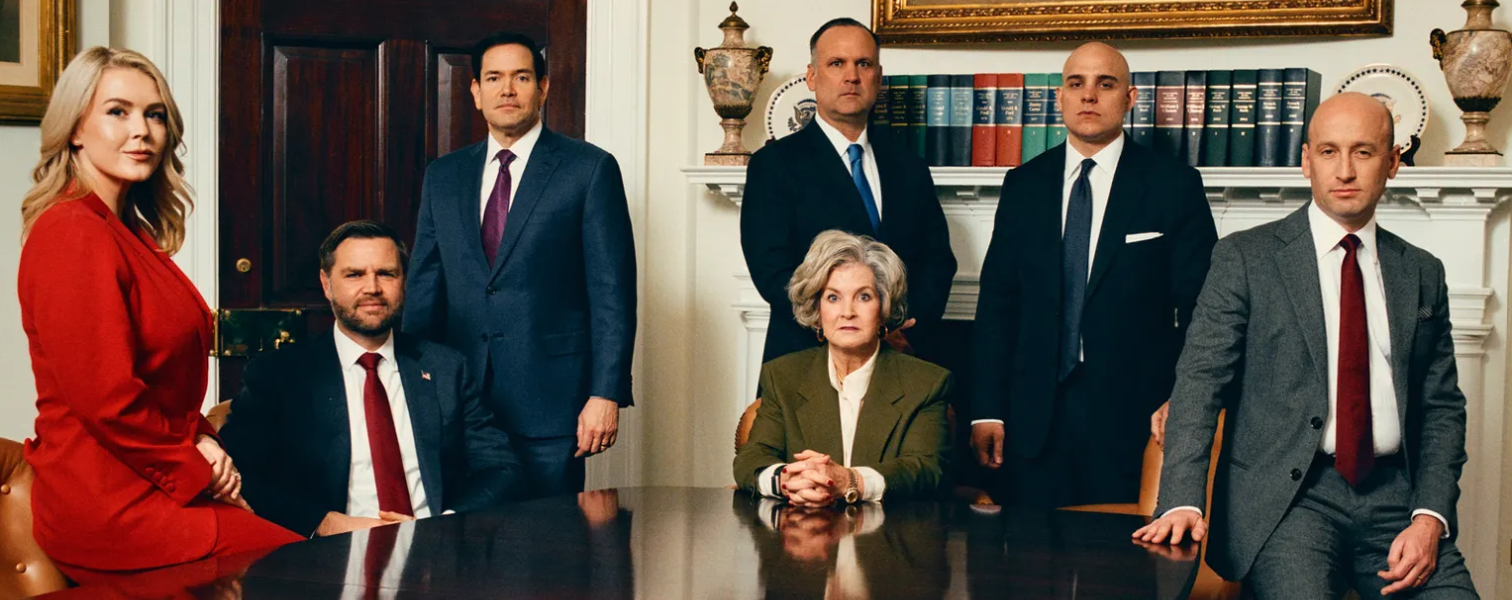
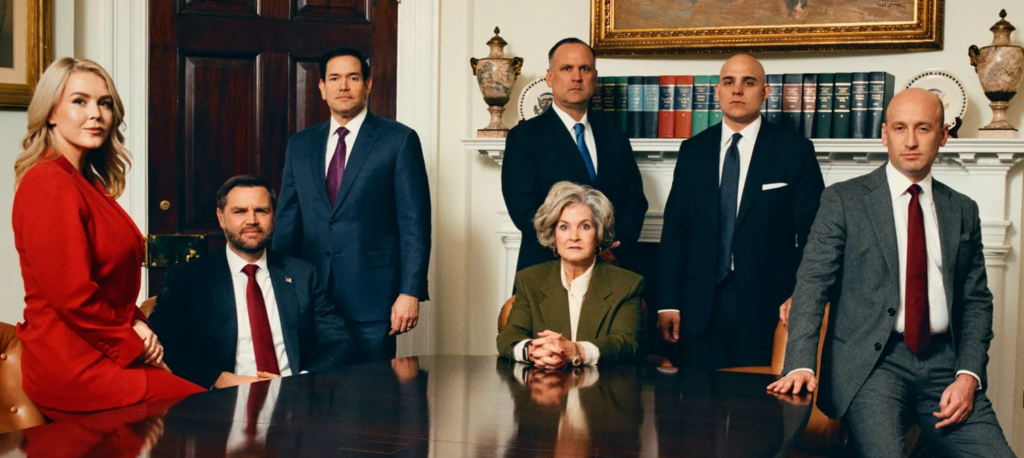
On the morning of November 4, 2025, Wiles convened with what she calls her “core team” in the Oval Office: Vice President JD Vance, Secretary of State Marco Rubio, and deputy chief of staff Stephen Miller. The agenda reflected the scale of the administration’s goals—eliminating the congressional filibuster and intensifying efforts to remove Venezuelan president Nicolás Maduro from power. Yet the meeting also revealed something more telling than policy priorities: Wiles’ command of the room, including the president himself.
As Trump launched into a familiar monologue about the filibuster, Wiles abruptly stood and headed for the door. When Trump challenged her—asking whether her departure was truly an emergency—she answered coolly that it was, and that it “didn’t involve” him. She left without further explanation, a small but striking assertion of authority that encapsulated her leadership style: direct, disciplined, and unconcerned with theatrics.
Throughout the first year of Trump’s second term, Wiles positioned herself as the administration’s stabilizer. Unlike the chaotic early years of Trump’s first presidency, this White House functioned with tighter controls and clearer lines of power. Wiles enforced structure, limited access, and relied on a hardened inner circle—often referred to internally as “junkyard dogs”—to advance the president’s agenda and fend off political threats.
JD Vance, newly elevated to the vice presidency, played a key role as both ideological ally and political enforcer, while Rubio handled the diplomatic front amid escalating international tensions. Stephen Miller, a veteran of Trump’s first term, remained instrumental in shaping domestic strategy. Together, the group operated with a shared sense of urgency and loyalty, but it was Wiles who coordinated their efforts and decided when—and how—the president would engage.
Her approach was not rooted in public visibility or rhetorical flourish. Instead, Wiles exercised power through control of time, information, and access. Even Trump, known for resisting constraints, appeared to recognize her authority, tolerating moments of defiance that few others could afford.
This portrait of the Trump White House underscores a central reality of the second term: while the president remained the dominant public figure, the machinery of power was increasingly shaped behind the scenes. In Susie Wiles, the administration found a chief of staff willing to impose order, absorb pressure, and, when necessary, walk out of the Oval Office without asking permission.
As Trump’s second term continues to test institutions at home and abroad, Wiles’ role highlights how modern power often operates—not through spectacle, but through quiet, decisive control exercised just out of view.
Check out our latest article: Leaked Avengers: A Trailer Hints at Captain America Return