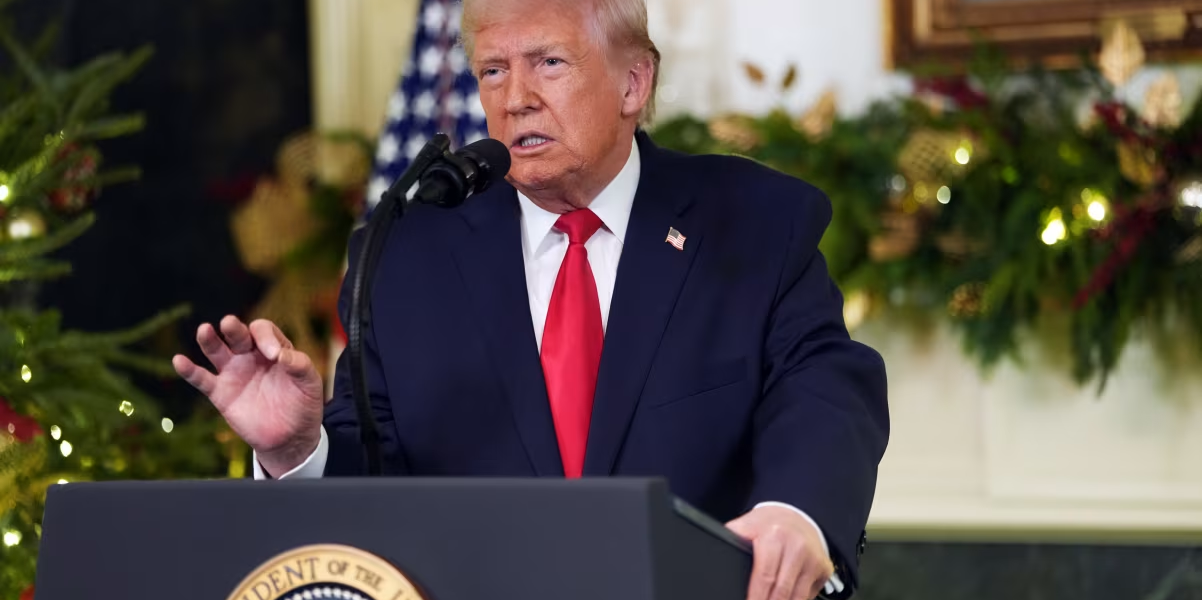

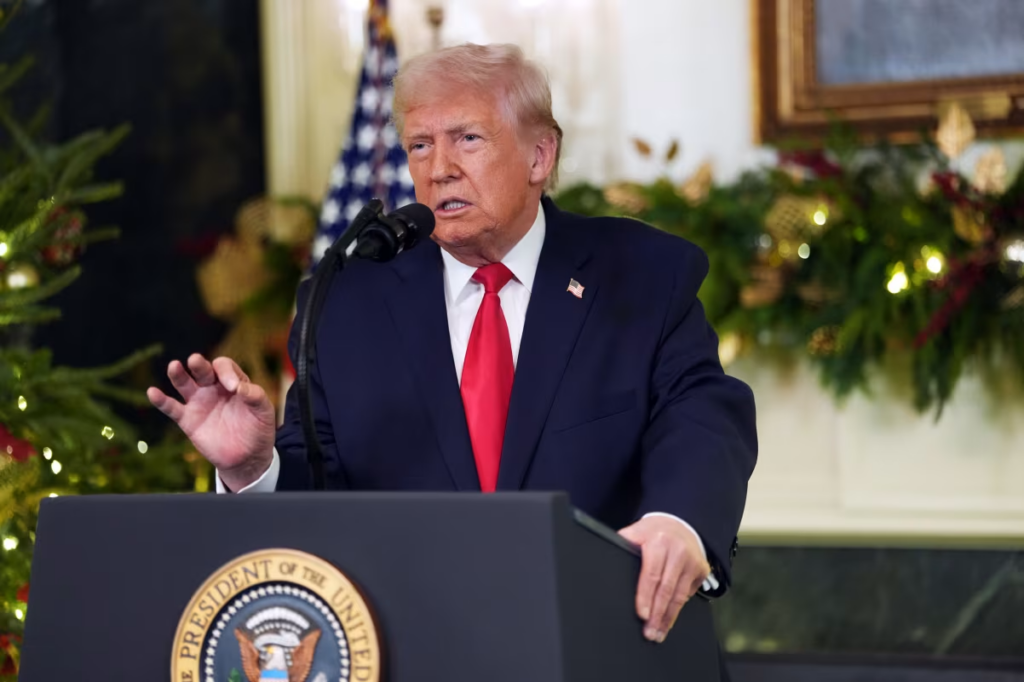
President Donald Trump’s Christmas-season address to the nation was meant to project strength and momentum. Instead, it highlighted a deeper political vulnerability that continues to weigh down his second term: a widening gap between the president’s rhetoric and how Americans experience their daily lives.
Unlike historic presidential addresses reserved for war, tragedy, or national unity, Trump’s speech struck a combative tone. He painted a bleak picture of a country he claims was “dead” when he took office, while insisting that dramatic progress has already been achieved. The message was familiar to supporters but jarring for many Americans hoping for empathy amid persistent economic pressure.
Trump framed lingering problems—high prices, economic anxiety, and public dissatisfaction—as leftovers from the Biden administration. But polls suggest voters are no longer persuaded by that argument. A majority of Americans now say Trump himself bears primary responsibility for the state of the economy, undercutting one of his core political strategies: relentless blame-shifting.
The address leaned heavily on disputed or exaggerated economic claims, asserting falling prices, rising wages, and unprecedented prosperity. Yet many Americans continue to struggle with rising costs for groceries, housing, health insurance, and childcare. Inflation has not meaningfully declined since Trump returned to office, unemployment has ticked upward, and wage growth has slowed—realities that clash with the administration’s optimistic narrative.
This disconnect reflects a broader challenge for Trump. Once renowned for his ability to shape political reality through branding and repetition, the president appears to be losing his grip on public perception. Telling voters that conditions are improving—while they feel otherwise—risks reinforcing skepticism rather than loyalty.
The speech also revealed strains within Trump’s political coalition. Republican resistance in Congress, growing midterm anxiety, and rare public criticism from longtime allies suggest that the aura of dominance Trump cultivated over the GOP may be fading. Even some Republicans now worry that his confrontational messaging could backfire in the 2026 elections.
Still, Trump’s address was not without purpose. It reaffirmed his bond with his core base, emphasizing hardline immigration policies, crime, tariffs, and an “America First” worldview. For grassroots supporters, the speech reinforced familiar themes of strength and defiance.
But presidential elections—and midterms—are not won on base enthusiasm alone. Trump’s decision to scold voters rather than acknowledge their frustrations may energize opponents as much as supporters. Democrats, facing their own credibility problems, may welcome Trump’s prominent role in shaping the 2026 political battlefield.
The president retains opportunities to change course. Upcoming tax cuts, potential interest rate shifts, and targeted economic measures could improve public sentiment if they deliver tangible relief. However, Trump’s unwavering commitment to tariffs—despite warnings from economists—signals that he is unlikely to abandon policies that may fuel higher prices in the short term.
In the end, Trump closed his address with a familiar promise: that America is stronger, richer, and on the brink of historic prosperity. The challenge is no longer in saying it loudly, but in convincing a skeptical nation that it’s true.
Check out our latest article: Steven Spielberg Drops First Disclosure Day Trailer