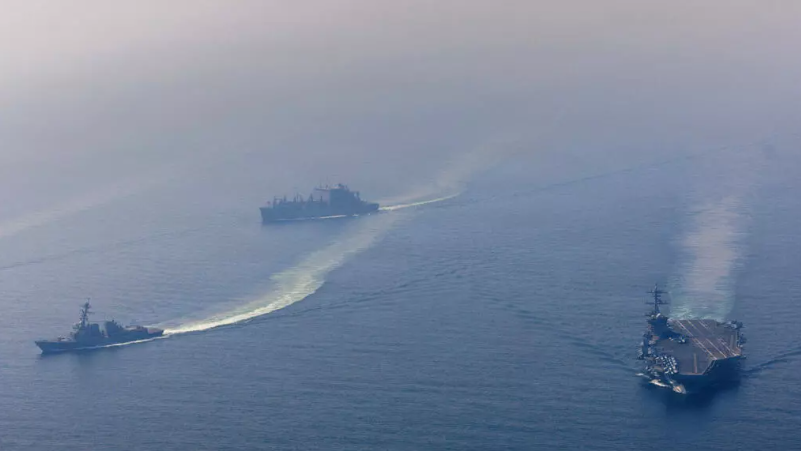
The United States has significantly expanded its military presence in the Middle East, deploying a large force of warships and aircraft that analysts say could support a sustained campaign against Iran if ordered by President Donald Trump.
According to US officials, Washington currently has 13 warships operating in the region, including one aircraft carrier, nine destroyers and three littoral combat ships. A second aircraft carrier strike group is also en route, marking a rare moment in which two US carriers could be positioned in the Middle East at the same time.
The buildup comes amid heightened tensions with Tehran and renewed threats from Trump, who has warned of possible military action if negotiations over Iran’s nuclear program fail to produce a new agreement.
Warships and Carriers
At the center of the current deployment is the USS Abraham Lincoln, which is operating in regional waters. It carries dozens of warplanes and is supported by guided-missile destroyers capable of launching precision strikes.
Meanwhile, the USS Gerald R. Ford — the world’s largest aircraft carrier — is heading toward the Middle East from the Atlantic Ocean. It is accompanied by three additional destroyers. The presence of two aircraft carriers in the region is uncommon and underscores the seriousness of the current posture.
The last time two US carriers were deployed to the Middle East was during last year’s escalation, when the United States targeted Iranian nuclear sites amid a broader regional conflict.
Strategic analysts say that assembling this level of firepower creates both military capability and political pressure. Once forces are in place, the option of using them becomes more immediate and tangible.
Fighter Jets and Refuelling Aircraft
In addition to naval forces, the US has moved a large fleet of aircraft into the region. These include advanced F-22 Raptor stealth fighters, F-15 and F-16 warplanes, and KC-135 aerial refueling tankers that allow jets to operate for extended periods.
Flight-tracking data has shown refueling aircraft and airborne warning systems operating near or within Middle Eastern airspace, signaling preparations for potential sustained air operations.
Together, the naval and air deployments would allow the US military to conduct rapid strikes or maintain a longer-term air campaign if directed.
Diplomacy and Rising Tensions
The buildup follows renewed tensions between Washington and Tehran. Trump previously ordered strikes on Iranian nuclear facilities and has repeatedly warned of further military action if talks do not result in a new nuclear agreement to replace the deal he withdrew from during his first term in 2018.
US and Iranian officials met in Geneva this week in an effort to avoid escalation. Iranian representatives said the sides agreed on “guiding principles” for a potential deal. However, the White House described the progress as limited, saying major differences remain.
Trump has also tied US pressure to Iran’s internal unrest, previously warning that Washington could intervene if Iranian authorities used deadly force against protesters.
A Region on Edge
While no final decision on military action has been announced, reports indicate that US forces could be prepared to act on short notice. The concentration of naval power, strike aircraft and support systems has raised concerns about how quickly the situation could escalate.
For now, diplomacy and deterrence are unfolding side by side. Whether the military buildup remains a show of force or becomes the opening phase of a new conflict may depend on the outcome of negotiations in the coming days.
Check out our latest article: Jacksonville Rapper Lil Poppa Dies at 25, Cause of Death