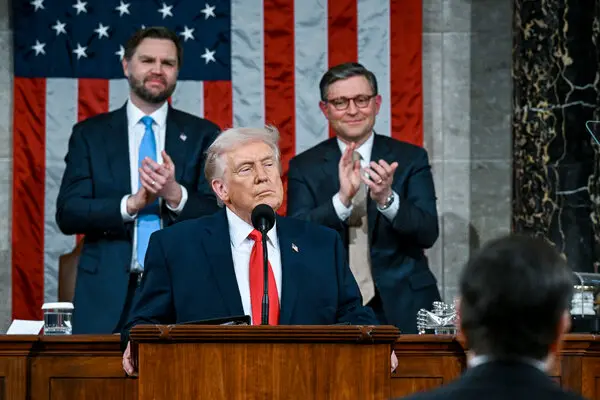
For nearly an hour, Donald Trump delivered a State of the Union address that felt unusually upbeat.
He touted improving economic indicators, celebrated the U.S. men’s Olympic hockey team and invoked the nation’s upcoming 250th birthday. America was “the hottest,” he said. The country was “winning.” The tone echoed optimism more commonly associated with past presidents than with Trump’s typically combative style.
Then the mood shifted.
“If you agree with this statement,” Trump said, pausing for effect, “stand up and show your support: The first duty of the American government is to protect American citizens, not illegal aliens.”
Republicans rose in unison, applauding. Democrats remained seated. Trump shook his head and sighed in their direction — a made-for-television moment that quickly became the defining image of the night.
From that point forward, the speech moved into more familiar territory. The language sharpened. The opposition was described as “crazy” and “sick.” Immigration became the focal point, with Trump blaming undocumented migrants for crime and social strain, while highlighting guests whose family members were killed by undocumented immigrants.
The tonal pivot underscored the dual strategy likely to shape Republican messaging heading into the midterms: optimism on the economy, confrontation on immigration.
On economic policy, Trump pointed to easing inflation and falling prices, arguing that his administration had reversed Democratic policies. But polling suggests skepticism remains high, with many Americans still worried about housing, groceries and health care costs.
On immigration, Trump returned to themes that have defined his political brand, portraying border enforcement as a moral and national imperative. The issue has energized his base but also drawn criticism from Democrats and civil rights advocates.
The official Democratic response came from Abigail Spanberger, who accused Trump of scapegoating and failing to offer concrete solutions to affordability challenges. Some Democratic lawmakers skipped the address, while others protested from the chamber, including Rep. Al Green, who was escorted out after displaying a sign.
The speech was relatively light on detailed new policy proposals. Trump floated ideas including expanded retirement-style savings accounts and renewed support for voter ID legislation, but offered limited specifics.
By the end of the night, the contrast was clear. What began as a forward-looking address built around economic recovery and national pride ended as a sharper, partisan appeal — a reminder that even in his most ceremonial moments, Trump rarely strays far from political combat.
Check out our latest article: Wembanyama Makes History as Spurs Face Pistons