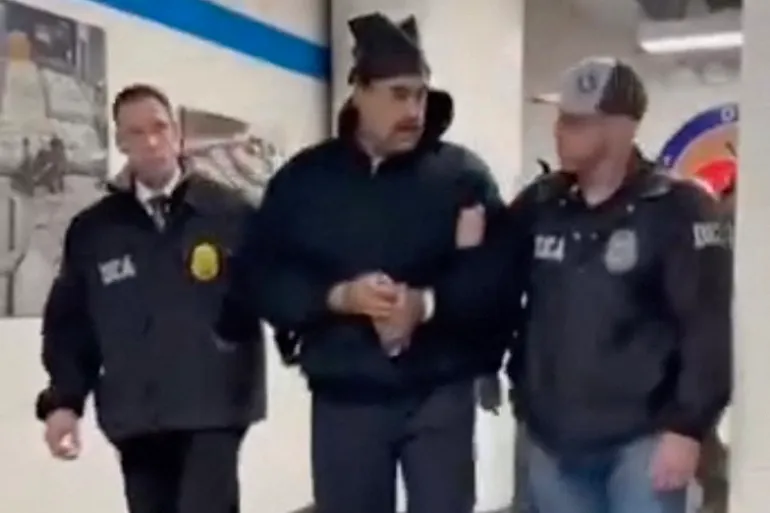
In a dramatic escalation that reshaped regional and global politics overnight, the United States carried out a coordinated military operation that led to the capture of Venezuelan President Nicolás Maduro and the bombing of key sites across Venezuela. The raid, praised by US President Donald Trump as a historic display of American power, has drawn fierce international condemnation while raising profound questions about sovereignty, legality, and what comes next for Venezuela.
According to US officials, the operation—code-named Absolute Resolve—was the culmination of months of intelligence gathering, military rehearsals, and mounting pressure on Caracas. Washington had long accused Maduro of involvement in drug trafficking and had previously offered a $50 million reward for information leading to his arrest. In parallel, the US increased its military presence in the Caribbean and carried out missile strikes on alleged drug-running vessels, actions that had already sparked concern at the United Nations.
Late on Friday night, Trump authorized the operation as weather conditions briefly opened a narrow window. Roughly 150 aircraft took off from 20 airbases across the Western Hemisphere. US forces disabled Venezuela’s air defence systems and plunged large parts of Caracas into darkness before helicopters landed at Maduro’s compound in the early hours of Saturday. Within minutes, Maduro and his wife, Cilia Flores, were in US custody.
Less than three hours later, Maduro was aboard a US aircraft carrier and subsequently flown to New York, where images released by the White House showed him escorted by US agents. The speed and secrecy of the operation recalled past high-risk US missions, most notably the 2011 raid that killed al-Qaeda leader Osama bin Laden.
On the ground, however, the impact was devastating. Explosions were reported across Caracas and several surrounding states, forcing civilians to flee their homes in fear. While official casualty figures have not been released, US officials have privately acknowledged that at least dozens of people were killed. Venezuela’s government described the strikes as an act of armed aggression, a view echoed by Russia, China, and other countries that demanded Maduro’s release.
In Washington, Trump announced that the US would oversee Venezuela’s administration until a new leader is selected, leaving open the possibility of deploying troops if necessary. In Caracas, the Supreme Court appointed Vice President Delcy Rodríguez as acting president, citing the need to ensure continuity of the state amid Maduro’s forced absence.
As the shockwaves continue to spread, Venezuela now faces deep uncertainty. The operation has removed a long-standing leader, but at the cost of civilian lives, regional stability, and a sharp escalation in US intervention. Whether this marks the beginning of a transition—or a prolonged crisis—remains an open and urgent question.
Check out our latest article: Stranger Things Drops Series Finale Trailer