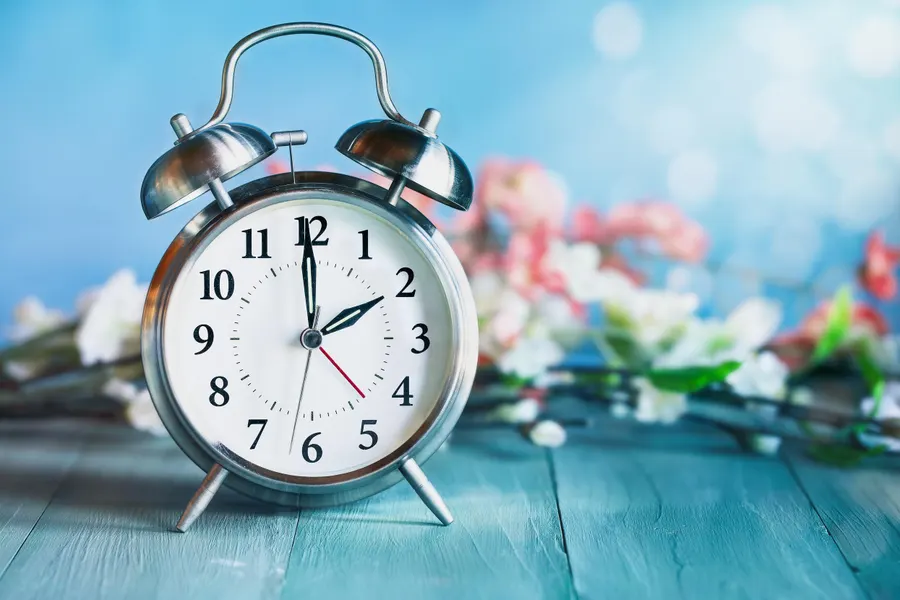
Daylight saving time officially began across most of the United States on Sunday, March 8, 2026, meaning millions of Americans lost an hour of sleep as clocks moved forward early in the morning.
The annual time change took place at 2 a.m. local time, when clocks jumped ahead to 3 a.m. The shift marks the start of the period commonly known as “spring forward,” which moves an hour of daylight from the morning to the evening.
What Daylight Saving Time Means
Daylight saving time is designed to extend evening daylight during the warmer months. By moving clocks forward by one hour, sunrise occurs later in the morning while sunsets happen later in the evening.
For example, before the time change, sunrise in Boston occurred around 6:09 a.m. and sunset at 5:41 p.m. After the shift, sunrise moved to about 7:08 a.m., while sunset extended to roughly 6:42 p.m., giving people more daylight in the evening.
When the Time Change Happens
Since 2007, daylight saving time in the United States has started on the second Sunday in March and ended on the first Sunday in November. Before that change, the start date had shifted several times throughout history.
The practice dates back more than a century. The U.S. first adopted daylight saving time in 1918 during World War I as a way to conserve fuel. It was also used during World War II for similar reasons tied to national security and energy conservation.
Do We Lose or Gain an Hour?
When daylight saving time begins in March, people lose one hour as clocks move forward. The opposite occurs in the fall, when clocks move back an hour and people regain the lost time.
For 2026, daylight saving time will remain in effect until November 1, when clocks will “fall back” to standard time at 2 a.m. local time.
States That Do Not Observe Daylight Saving Time
Not every U.S. state follows the time change. Only two states — Hawaii and Arizona — do not observe daylight saving time, although the Navajo Nation within Arizona does follow the change.
Several U.S. territories also do not change their clocks, including Puerto Rico, Guam, American Samoa, the Northern Mariana Islands and the U.S. Virgin Islands.
Do Devices Update Automatically?
Most modern smartphones and digital devices update automatically when daylight saving time begins, as long as the device is set to adjust time automatically.
While the time change has been debated for years, it remains part of the U.S. schedule, bringing longer daylight evenings for much of the year.
Check out our latest article: Sen. Sheehy Helps Police Remove Anti-War Protester from Capitol Hearing