As Apple enters a new leadership chapter, the company faces one of the most critical transitions in its history: defining its future beyond the iPhone.
The End of an Era
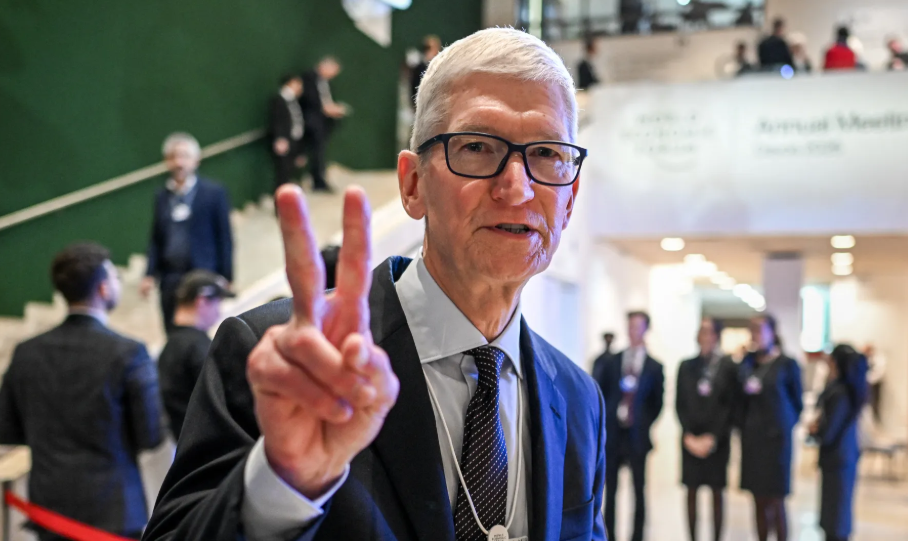
After years at the helm, Tim Cook is stepping down as CEO, passing leadership to hardware chief John Ternus while remaining as executive chairman. The move signals both continuity and change—preserving Apple’s leadership structure while ushering in a new phase focused on innovation.
Cook’s tenure was marked by extraordinary growth. Building on the foundation laid by Steve Jobs, he transformed Apple into one of the most valuable companies in the world. Under his leadership, products like the Apple Watch and AirPods expanded the ecosystem, while services became a major revenue driver.
Yet, despite this success, Apple now faces a pressing question: what comes next?
The Search for the Next Breakthrough
The iPhone remains Apple’s defining product, but the company has struggled to replicate its impact in entirely new categories. Efforts to diversify—such as its abandoned autonomous car project—highlight the difficulty of launching another transformative product.
More recently, Apple introduced the Apple Vision Pro, marking its entry into mixed reality. While technologically advanced, the device’s high price and niche appeal have limited widespread adoption, raising questions about its role as a future growth driver.
This leaves Apple in a familiar but challenging position: dominant in its core business, yet still searching for its next major innovation.
A Complicated Position in AI
Apple’s approach to artificial intelligence has been cautious compared to competitors. In 2024, Cook unveiled “Apple Intelligence,” a vision for deeply personalized AI that prioritizes user privacy. However, turning that vision into reality has proven difficult, with key features delayed.
The company has also partnered with Google to integrate its Gemini models, signaling a shift toward collaboration rather than building everything in-house.
While rivals invest heavily in AI infrastructure, Apple has taken a more measured path. This strategy could prove advantageous if AI models become widely accessible commodities—but it also risks leaving Apple behind in the short term.
Leadership Built Around Hardware
Alongside Ternus’ promotion, Apple elevated Johny Srouji to a key hardware leadership role. Srouji has been instrumental in Apple’s chip development, which has become a cornerstone of its competitive advantage.
This emphasis on hardware suggests Apple may continue to differentiate itself not through AI models alone, but through tightly integrated devices powered by custom silicon.
Rising Competition
Apple’s challenge is intensified by aggressive moves from competitors. OpenAI is investing in new hardware initiatives, Meta continues to develop virtual reality and smart glasses, and Google is doubling down on immersive technologies through partnerships and new products.
The race to define the next computing platform—whether through AI, wearables, or augmented reality—is accelerating.
A Defining Moment
Tim Cook proved that Apple could thrive after Steve Jobs, scaling the company to unprecedented heights. Now, the responsibility shifts to John Ternus to answer a more difficult question: can Apple still reinvent itself?
The company’s future may depend not just on refining existing products, but on delivering a breakthrough that redefines how people interact with technology once again.
Check out our latest article: Eight Children Killed in Shreveport Domestic Shooting