
Health officials are investigating a suspected hantavirus outbreak aboard a cruise ship after six people became ill and three died, raising renewed concern about a virus that remains rare but highly dangerous and without a vaccine or specific treatment.
The World Health Organization said one case on the ship was confirmed and five others were suspected. The vessel, operated by Oceanwide Expeditions, was in the Atlantic Ocean when the illnesses emerged. One passenger is reportedly in intensive care in South Africa, while two crew members remain onboard in urgent need of medical attention.
Though uncommon, hantavirus has a high fatality rate in severe cases, making even small clusters of infection a serious public health concern.
A rare virus with severe consequences
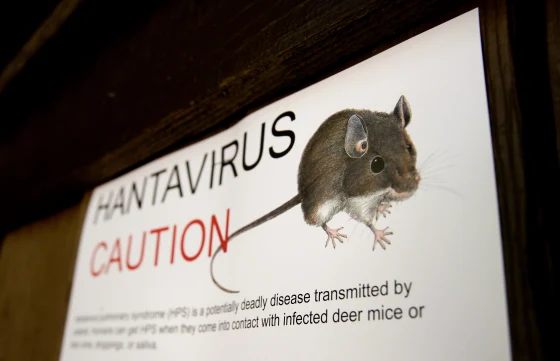
Hantaviruses are a family of viruses carried primarily by rodents, especially mice. Humans become infected through contact with saliva, urine, or droppings from infected animals, often when contaminated dust particles are inhaled.
In the United States, the most common carrier is the deer mouse, a small rodent found in rural and semi-rural areas, particularly in the Southwest.
Experts say the disease is difficult to identify early because initial symptoms resemble common illnesses.
“It’s not uniformly fatal and it’s not always severe, but the fatality rate is still thought to be up to 40%, which is really high,” said Dr. Jeff Duchin, a retired public health official who helped investigate early U.S. outbreaks.
Symptoms that can be easily missed
Early signs of hantavirus infection typically include fever, fatigue, and muscle aches. Some patients also experience headaches, dizziness, chills, and gastrointestinal symptoms.
Because these symptoms overlap with flu-like illnesses, COVID-19, and other infections, early diagnosis is often missed.
In more severe cases, the virus can progress rapidly into hantavirus pulmonary syndrome, a life-threatening lung condition. Patients may develop coughing, shortness of breath, and fluid accumulation in the lungs.
Dr. Scott Roberts of Yale School of Medicine noted that symptoms can take up to eight weeks to appear after exposure, making detection even more challenging.
In advanced stages, the illness can cause sudden respiratory failure due to fluid leakage into the lungs and a dangerous drop in blood pressure.
“The fatal, rapidly progressive pulmonary illness can come on very quickly,” Duchin said.
How infection happens
Most human cases occur when people disturb rodent nests or droppings in enclosed or poorly ventilated spaces such as cabins, barns, or storage areas. Cleaning these spaces without proper precautions is a common risk factor.
Outbreaks in the United States are most frequently reported in the western states, where deer mice populations are more common.
Since the disease was first identified in 1993, there have been more than 890 confirmed cases in the United States, according to the Centers for Disease Control and Prevention.
Although extremely rare, person-to-person transmission has been reported in limited contexts, according to the World Health Organization, particularly with certain strains found outside the United States.
No vaccine, no targeted treatment
There is currently no vaccine or antiviral treatment for hantavirus. Care is supportive, meaning patients receive oxygen therapy, fluid management, and intensive care if needed.
“The best way to treat this is prevention,” said Dr. Roberts.
Prevention and safety measures
Health authorities emphasize that prevention is the most effective protection against hantavirus infection. Recommended precautions include:
- Avoiding contact with rodent droppings or urine
- Wearing gloves and an N95 mask when cleaning potentially contaminated areas
- Ventilating enclosed spaces before cleaning
- Using disinfectants rather than sweeping or vacuuming droppings, which can spread particles into the air
Experts also advise checking buildings for signs of rodent entry and addressing infestations promptly.
A reminder of a hidden risk
Recent cases, including the death of Betsy Arakawa, the wife of actor Gene Hackman, have highlighted how hantavirus can appear unexpectedly and progress rapidly, even in otherwise healthy individuals.
While rare, the virus remains a serious reminder of the risks associated with rodent exposure—especially in rural environments or enclosed spaces where contamination can go unnoticed.
As investigations continue into the cruise ship outbreak, health officials stress that awareness and prevention remain the strongest defenses against a disease that still has no cure.
Check out our latest article: Comey Indicted Over Alleged Threat Against Trump
